Hire developers who build software for what happens on the job site.
A construction project doesn't run on a static plan. It runs on daily schedule shifts, material deliveries, subcontractor coordination, and safety conditions that change by the hour. We place developers who've built for that reality — software that tracks a project the way a site manager actually thinks about one, not the way a generic project management tool assumes it should.
Hire Construction Developers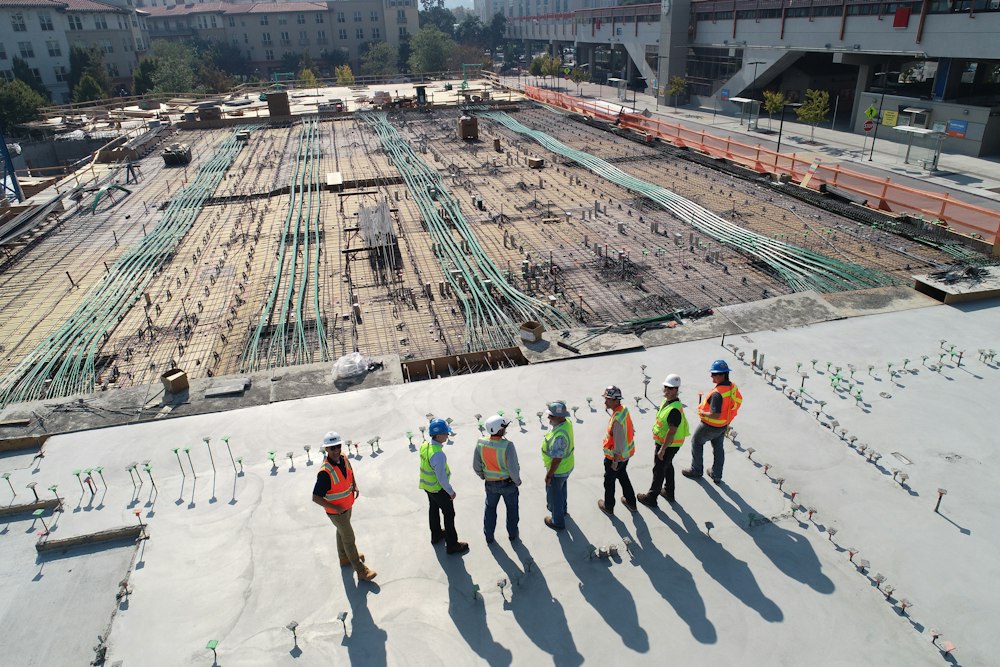
Construction developers we place
Construction projects don't fall behind because nobody wanted better software. They fall behind because the software available was built for an office, not a job site. We place developers who build specifically for construction, so the system matches how a project actually moves.
Project Management Platform Developers
We place developers who build the software that tracks schedules, budgets, and subcontractors in one place — so a project manager can see where things stand without chasing five separate updates.
Building Information Modeling (BIM) Engineers
BIM software only helps if the model stays accurate as a project evolves. Our developers build the tools that keep design, engineering, and field data in sync across the whole build.
Mobile App Developers for Field Crews
Crews aren't sitting at a desk. We place developers who build offline-first mobile apps that hold up on a job site with no signal, then sync the moment connectivity returns.
Estimating & Bid Management Developers
A miscalculated bid costs a contractor the job or the margin. Our developers build the estimating systems that pull accurate material and labor costs into a bid before it goes out the door.
Construction Data & Analytics Developers
Progress, cost, and safety data pile up faster than most teams can review manually. We place developers who build the dashboards that surface budget overruns and delays before they compound.
IoT & Equipment Monitoring Engineers
Heavy equipment sensors and site cameras all speak different protocols. Our developers connect them into one system, so utilization and maintenance data is usable instead of scattered across five vendor apps.
Safety & Compliance Systems Developers
Incident reports, inspections, and OSHA compliance can't be an afterthought. We place developers who build safety systems that hold up to a regulator's review, not just an internal one.
Equipment & Fleet Management Developers
Idle equipment costs money whether it's broken down or just poorly scheduled. Our developers build the systems that track machinery location, maintenance, and utilization across a site or a fleet.
Types of custom construction software we build
Every contractor or developer eventually hits the same wall: the off-the-shelf tool covers the basics but not the specifics of how this particular project or company actually runs. These are the systems our developers build when "close enough" isn't.
AI-Powered Progress Monitoring
Computer vision models trained on site photos or drone footage can compare actual progress against the schedule automatically — which means delays get flagged while there's still time to recover.
Predictive Cost & Schedule Analytics
Predictive models trained on historical project data flag budget or timeline risk before it becomes a missed milestone, so decisions get made on data instead of a gut estimate.
Digital Twin & 3D Modeling Platforms
A digital twin that mirrors the physical build in real time lets teams catch clashes and design issues before they turn into expensive rework in the field.
Blockchain-Based Supply Chain Verification
Material fraud and delays cost the industry real money, mostly because verification happens after materials have already changed hands. Blockchain-based tracking makes every shipment traceable, so provenance and delivery claims can actually be checked.
Drone-Based Site Surveying Tools
Drone imagery is only useful once it's processed into something a site manager can act on. We build the software that turns raw flight data into site maps, volume calculations, and progress overlays.
Wearable Safety & Worker Tracking Systems
Wearable sensors generate a constant stream of location and safety data. Our developers build the systems that turn that stream into real-time alerts and simpler crew management.
Subcontractor & Vendor Management Platforms
General contractors need software that handles subcontractor bids, payments, and compliance documents — three things a generic accounting platform was never built to coordinate.
Other Applications
Punch list management, permit tracking, warranty and closeout systems, equipment rental platforms — if it touches how a project gets built or paid for, our developers can likely build it.
Benefits of building bespoke solutions
Off-the-shelf construction software solves someone else's project reasonably well. Custom software solves yours exactly.
1. Competitive Advantage
When your software is built around your specific project types, crews, and workflow, it becomes an operational edge a competitor can't just license and copy.
4. Efficiency and Productivity
Custom tools remove the manual logging and paperwork reconciliation that eat into a project team's week, so that time goes back into the build itself.
2. Improved Decision-Making
Software built around your actual site and cost data gives you decisions grounded in this project's numbers, not last quarter's assumptions.
5. Scalability and Flexibility
A system built for your operation today can expand as project volume, crew size, or markets change. You're not boxed in by a vendor's product roadmap.
3. Innovation
Custom development gives you room to adopt the sensor, model, or automation a generic platform hasn't built support for yet — and to benefit from it a project earlier than competitors will.
Which operations benefit from custom construction software development?
Construction businesses of very different sizes benefit from custom software built by developers who understand the domain. A few examples:
Why teams choose our construction developers
Developers With Domain Context
Every developer we place has built construction or field-operations systems before. That context is what keeps a project moving once the requirements get specific to a job site condition or a scheduling constraint.
A Track Record in ConTech
We've placed developers on construction projects long enough to know where they typically go wrong — offline reliability, field-to-office sync, subcontractor coordination — and we plan around those points from day one.
Software Built Around Your Operation, Not a Template
No two contractors run identically, so the software behind them shouldn't either. Our developers build for your project types, your crews, and your existing systems specifically.
Engineers fluent in 100+ technologies
Our developers work across the modern stack and the AI-assisted tools that help them ship faster, so your construction platform gets built in whatever stack fits it best — not whatever stack happens to be convenient for us.
Our full repertoireOur process. Simple, seamless, streamlined.

Discuss your requirements.
We talk through your projects, your crews, and the systems you're already running. This first call is also where we figure out whether you need one developer or a full engineering team.
Create a plan and assemble a team.
We map an approach against the engagement model you've chosen and bring in developers whose experience actually matches the project — BIM, mobile field tools, or scheduling systems, depending on what it needs.
Get to work.
Development starts, and you stay informed through it — regular progress updates and visible metrics, not a status call you have to chase down mid-build.